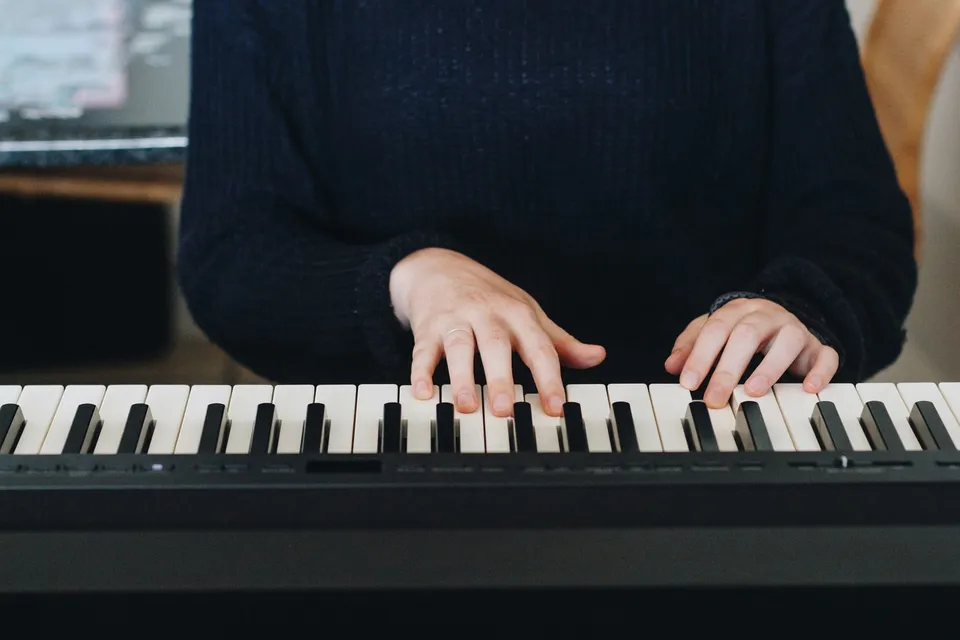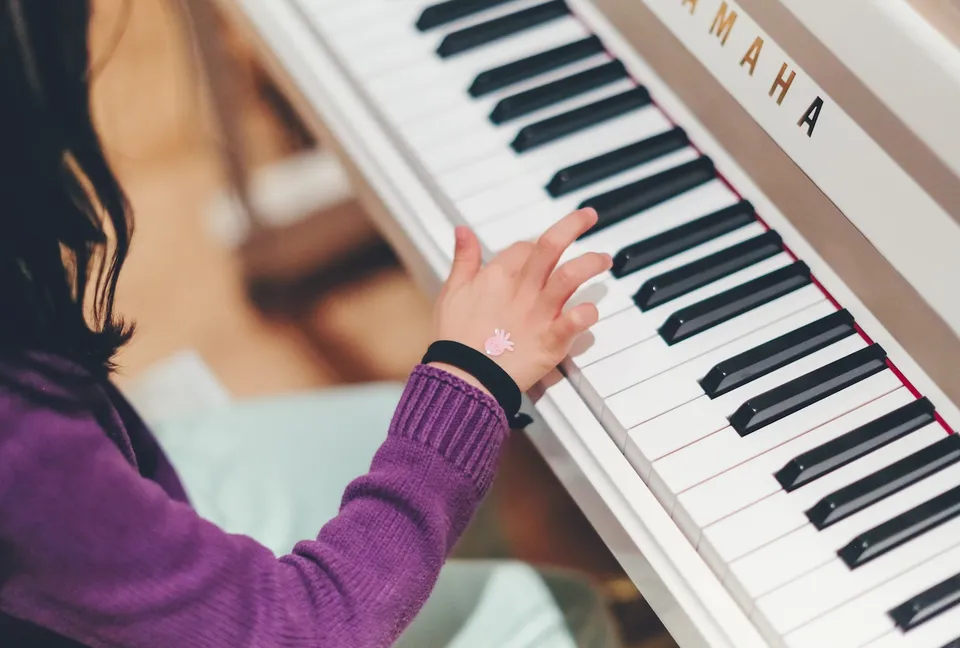
Listening can give your piano practice a clear musical purpose. You do not need to identify every chord or follow a whole score: start with one short passage and one question about the sound.
Choose a passage you want to hear again
Pick a recording you enjoy and find a short section with a clear beginning and ending. It might be a verse, a melody returning after an introduction or a few phrases from a classical piece. Listen once without making notes. On the second listen, describe what held your attention: a quiet ending, a change in the accompaniment or a tune that seems to rise above the other sounds.
Keep the task small enough to revisit. You can enjoy a complicated recording without being ready to play it. The aim is to notice a musical idea that you can explore with simpler material, rather than reproduce the performance immediately.
Follow the melody, then the accompaniment
Listen for the tune first. Hum a comfortable fragment or trace its rise and fall with your hand. Notice where it pauses and whether the next phrase answers the first. Listen again for the part beneath it. Does the accompaniment repeat a pattern, hold long notes or become quieter when the melody enters?
At the piano, try a familiar tune with a very simple accompaniment. Keep the tune clear, then change the accompaniment’s volume. Compare the two versions. You do not need more notes to hear how balance changes the character of the music.
Hear rhythm beyond the beat
A steady pulse gives you a reference point, but the spaces between notes matter too. Tap gently along with a short recording, then stop tapping and listen to where a phrase begins. Notice whether a repeated pattern feels settled, lively or spacious. Avoid forcing a beat onto music that deliberately moves freely.
Choose a rhythm from a piece you already play and clap it slowly. Leave the pauses intact. When you return to the keys, aim to keep the same shape rather than letting a difficult fingering remove a silence or stretch a note accidentally.
Compare two interpretations
If you can find two performances of the same piece, compare a short passage rather than the full recording. Listen for differences in pace, note length, emphasis and the end of each phrase. Describe the differences before deciding which you prefer. One may sound lighter; another may give a particular note more time.
Your own playing does not have to copy either version. Try one small choice on an approachable passage and hear whether it expresses what you intended. Bring the recording and your question to your teacher if you are unsure how to achieve a particular sound.
Listen to your own playing kindly
A short private recording can help you hear something you miss while concentrating on your hands. Choose one question before pressing record, such as whether the melody stays clear or the final phrase settles. Listen once for something that works, then identify one change to try. Repeatedly recording the whole piece can become frustrating when only a small transition needs attention.
Ask permission before recording anyone else and keep recordings private unless everyone involved agrees to share them. A phone recording is a practice aid; its microphone and the room affect the sound, so do not treat it as a precise measure of tone.
Bring one observation to your lesson
Write the performer and piece title alongside a short note about what you heard. For example: the left hand became quieter when the tune rose. Your teacher can help connect that observation with a suitable exercise or arrangement. Use the practice planning guide to turn it into a manageable task, or explore ways to keep practice rewarding when you need a fresh starting point.
These are general editorial listening activities, not a promise of a particular result or a new specialist service. For piano lessons with Angelica in Farmoor, share the music you enjoy and the questions you would like to explore.