Explore your next steps
Your guide to piano lessons in Oxford
Find your starting point, explore music you enjoy and build a useful routine between music lessons.
01
Find your starting point
Bring your musical interests
A piece you enjoy hearing can be a useful starting point for piano lessons in Oxford. It might be a classical melody, a pop song or one of your favourite light jazz tunes. Tell me what attracts you to it, and we can discuss a version suited to your experience. Working with an approachable passage gives the lesson a musical purpose while introducing skills that will also help with other pieces. Listen to its style and consider which details make it distinctive.
Take your first steps at the keyboard
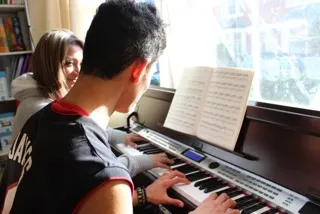
You do not need to read music before arranging a first lesson. We can explore the keyboard, listen to a short pattern and connect the sounds with the movements that produce them. New ideas are easier to discuss when you can hear an example. You are encouraged to ask whenever something is unclear. Repeating a small task thoughtfully gives you time to become familiar with the instrument without rushing to complete a whole piece.
Adult learners: return at your current level
Playing again after a break can bring back familiar music while revealing skills that need a little attention. You may remember a melody more readily than its notation, or feel less confident coordinating your hands. Bring a piece you know or describe what you used to enjoy. We can build on what remains familiar and revisit what needs work. You do not need to recover your old standard before starting.
Plan lessons for a younger learner
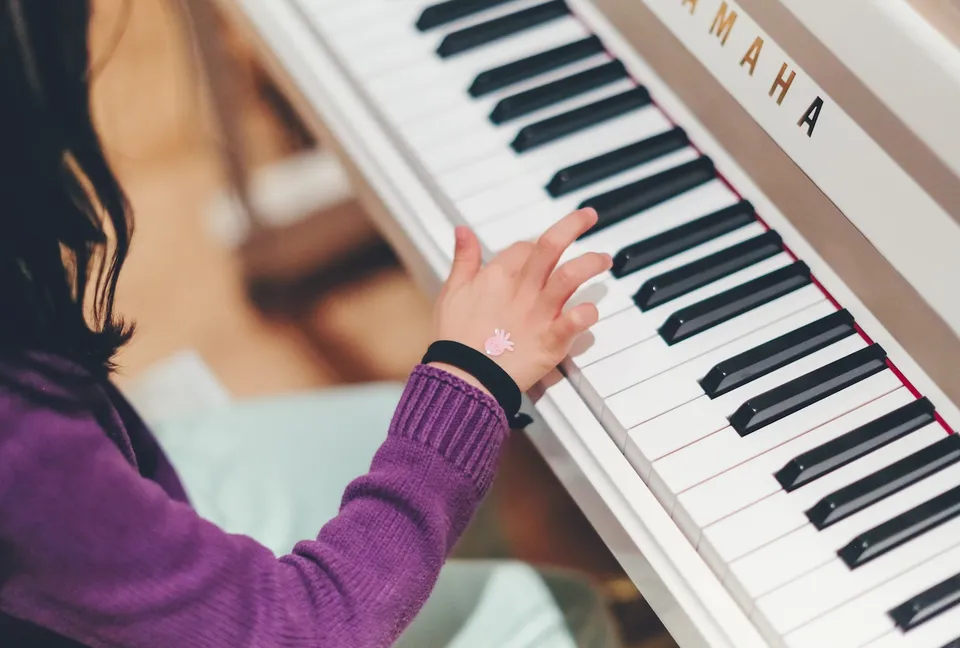
I welcome children from the age of five. Include your child’s age, interests and any musical experience in your enquiry. Weekly half-hour lessons have worked well for many of my pupils under twelve, although we should discuss individual needs. Parents and carers can help by understanding the practice task and encouraging a manageable routine. Being supportive does not require you to read music or play the piano yourself.
Music lessons that fit adult learners
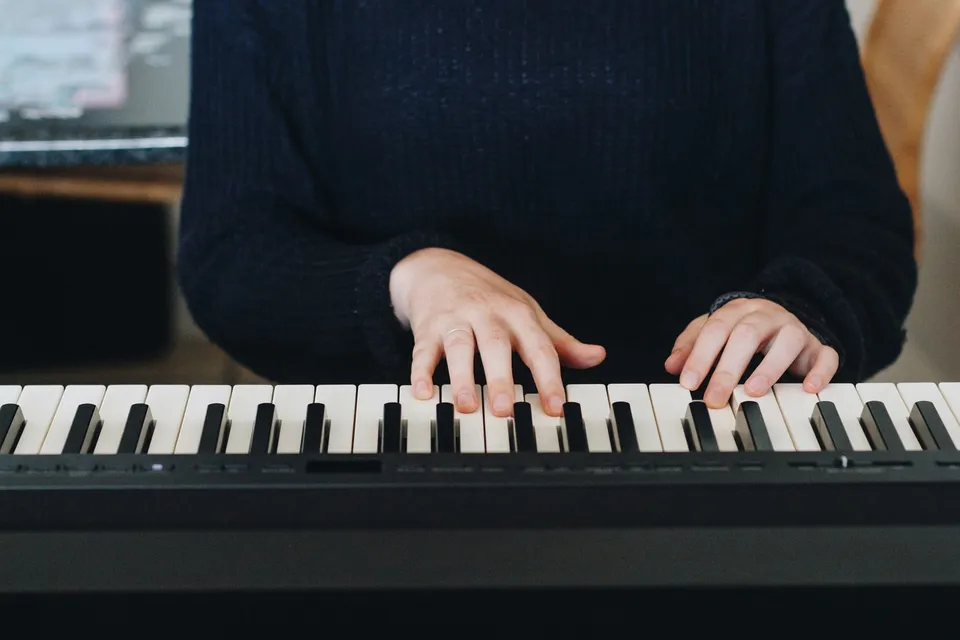
Adult learners bring different strengths: you may recognise tunes by ear, remember music taught at school or have clear ideas about the style you want to play. Tell me what feels familiar and where you need guidance. We can choose a manageable task around the time you have for practice. Flexibility means agreeing a useful routine together, rather than trying to fit someone else’s pace. Having fun with a familiar piece can sit alongside careful work on technique.
02
Develop technique and musical understanding
Keep rhythm connected to the music
A steady pulse gives a phrase shape, even at a slower pace. We can explore a short rhythm before adding more notes, listening to where sounds begin and end. When the pattern is secure, connect it with the pitches and hear the phrase as a whole. Increasing speed comes later. This approach gives you something specific to listen for instead of judging a performance only by whether you reached the final note.
Understand the roles of both hands
Melody and accompaniment often ask your hands to do different things. Exploring a short section separately can make each role clearer before bringing the parts together. Listen to which notes should stand out and which support them. Coordination develops through understanding these relationships as well as learning movements. A small passage gives us room to discuss balance, fingering and continuity without trying to solve every challenge in a piece at once. These choices contribute to musicality: how the notes become an expressive phrase.
Read music and explore your interpretation
Learning to read and write music can support the practical work at the keyboard. A repeated rhythm, a stepwise melody or a familiar chord offers a concrete example to explore. Connect what is written with the sound you hear, then notice how the same idea appears elsewhere. Your interpretation can develop as you explore emphasis, phrasing and the balance between parts. Recognising patterns can make a new piece less unfamiliar and help you understand musical choices rather than depending entirely on remembering individual notes.
Choose enjoyment or piano grades
Some students want to play music they love, while others enjoy the structure of working towards grades. Both are welcome. If examinations interest you, discuss the appropriate level, materials and entry arrangements before committing. No particular examination board is specified here. Without an exam, we can still set clear aims such as shaping a phrase or completing an arrangement, keeping progress connected with the music you want to make.
Develop your ear alongside reading
Listen to a short melody before playing it. Notice whether it moves by small steps or makes a bigger leap, and where it comes to rest. Hum a comfortable phrase, then explore the notes at the keyboard. Your aim is to connect a sound you recognise with the pattern on the page. Try a gentler touch in the accompaniment and hear whether the melody becomes clearer. Reading, listening and understanding chords can support each other.
03
Make practice useful and manageable
Decide what to listen for
Give a practice session one clear purpose. You might work on a change between two chords, a short rhythm or a smoother ending to a phrase. Write down the task and what a successful attempt should sound like. At the next lesson, share what became easier and what remained confusing. This gives us a useful starting point for the next step and helps practice feel more purposeful than simply repeating everything.
Work through a difficult transition
When the same point interrupts your playing, try a short section around it at a slower pace. Notice whether the difficulty comes from rhythm, reading or the movement between notes. Connect the section with the music immediately before and after it once it feels clearer. Starting from the beginning every time can leave that transition unexplored. Leave time for something enjoyable too, so careful work stays connected with making music.
Use an instrument you can access regularly
A keyboard can be a practical starting point, while a piano or weighted-key digital piano becomes useful as technique develops. Tell me what you already use before making a purchase. Consider where the instrument will go and when you can practise, as well as the instrument itself. Having regular opportunities to revisit lesson work matters more than buying something expensive before you understand which features will support your needs.
Recognise progress beyond a finished piece
Improvement can show in a steadier pulse, clearer reading or a more balanced melody and accompaniment. These changes are worth noticing even when you are still working towards a complete performance. We can review small achievements alongside your longer-term aims and adjust the work when needed. Everyone brings different experience and practice opportunities, so use your own starting point to assess progress rather than expecting someone else’s timetable.
Prepare a piece to share with another person
Performing can begin with a short piece for someone you know. Choose music you can continue through a small mistake and practise its opening and ending. If hesitation appears at the same point, return to that transition separately before trying the whole piece again. A private recording can help you notice something you played successfully as well as a detail to improve. Keep the goal modest: sharing music is an opportunity to communicate, not a test of everything you have learned.
For more ideas, explore keeping piano practice rewarding, planning a practice session and listening activities for piano learners.
04
Arrange piano lessons in Oxford
Find the teaching studio in Farmoor
Lessons take place at my home studio on Meadow Close, Farmoor, Oxford, OX2 9NZ. I provide the exact address when your first lesson is booked. Confirm your appointment before travelling, and mention access requirements in your enquiry so we can discuss the arrangements. The studio has an electric piano for the lesson; ask about home practice separately.
Choose a realistic lesson pattern
Most pupils attend weekly, with some choosing fortnightly lessons. We can discuss another agreed pattern alongside current availability. Think about the time available for practice between appointments and the journey to Farmoor when planning your routine. Include preferred days and times when you get in touch, along with the travel time you need. An enquiry begins a conversation about suitable arrangements; it does not confirm an appointment or reserve a regular lesson slot.
Half hour or hour-long piano lessons
Individual tuition costs £18 for half an hour or £36 for an hour and is pay-as-you-go. Read the prices and booking information and confirm payment arrangements before starting. A lesson cancelled within 24 hours of its arranged time is charged at the full price. Contact me early if plans change. If small group teaching interests you, ask about its current format and separate price rather than assuming these individual rates apply.
Tell Angelica what you would like to learn
When you ask about piano lessons, include your experience, musical interests and preferred times. For a child, please include their age. You can read about my musical background and how lessons work for more context. A favourite piece, a question about starting or a skill you want to develop is enough to begin the conversation. Contact me when you are ready to discuss your first appointment.
Individual tuition and small group arrangements
I offer tuition at my home studio in Farmoor, a village outside central Oxford. Individual lessons focus on your own questions; small group teaching is also offered by arrangement. Ask about the current format, availability and separate fees so you know what to expect before booking. Confirm the exact address and appointment before you travel. You will receive the address when your first lesson is booked, and we can discuss any access requirements in advance.